• My 2025 in Books

    This year, I read 52 books.

    The books overlapped and intersected with each other, but somehow tidily added up to one book a week.

    Searching for themes, it’s easy to see my grief for my cat, Torby, processed in book form. I lost her just as 2025 began, and found comfort in every cat-related piece of media I could get my hands on. The Traveling Cat Chronicles by Hiro Arikawa is easily my favorite book I read this year, and I will always be so grateful that it was there for me when I needed it.

    2025 was also the year I grew my Japanese studies beyond manga and began reading novels (for grown-ups!). キッチン by Banana Yoshimoto is one of my favorite books in English, and I loved reading it all the more in its original form. Yes, I still read plenty of manga — including the first nine volumes of ナナ as part of an online book club with fellow language-learners.

    One of the most unexpected favorites of 2025 was Kelly Bishop’s memoir, The Third Gilmore Girl. I understand why she chose to title the book as she did, but Bishop’s story — and her storytelling — transcend the label. Her raw stories of life as a dancer in 1970’s New York City have more in common with Just Kids than the fluff of Bishop’s Gilmore Girls co-star Lauren Graham’s Talking as Fast as I Can.

    Stray Observations:

    • I read Honey by Isabel Banta in a single sitting while camping earlier this year. I can’t remember the last time I did that!
    • The excitement surrounding Heated Rivalry honestly sustained me during a tough end to this year. I adore the show and the books are equally as brilliant.
    • It’s rare for me to downright hate a book. Don’t get me wrong, there are times when I love to be a hater. But when it comes to literature I try to be as open-minded and curious as possible. The books in the “not for me” category are books that I did not enjoy reading, but that I respect nevertheless. The books in the “kindling” category are genuine abominations.

    What Will I Read Next Year?

    Middlemarch. Mostly so I can stop talking about how I need to read Middlemarch.


  • “Parable of the Sower” – A Rereading

    I first read Octavia Butler’s Parable of the Sower in 2019. Originally published in 1993, Parable of the Sower gained renewed attention in the mid 10’s — reaching the NYT Bestseller list for the first time — for its prophetic depiction of a Trump-like presidency. Parable‘s President Christopher Donner, familiarly, vowed to return a crumbling United States to a long-lost golden age.  

    The book, at the time, felt foreboding. I distinctly remember the feeling of pique when narrator Lauren Olamina expresses shock at news of a measles outbreak. At the time, a measles outbreak was sweeping through New Jersey. How portentous! I thought. No, the word “portentous” didn’t actually sail its way down my stream of consciousness, but the novel nevertheless struck an excitingly sinister cord — the same feeling I used to get playing Bloody Mary with my friends. 

    Last week, I finished reading Parable of the Sower for the second time. My friends and I decided to start a book club. When someone suggested Parable of the Sower, I recalled the thrilling goosebumps of my first read, and happily agreed to pick it up again. For the month that followed, everyone in my life had to endure my exclamations of how the book was “too real.” 

    The fact that Octavia Butler predicted the “Make America Great Again” movement with surgical accuracy feels like an afterthought to the ways in which Parable depicts society as fractured, isolated, and self-serving. The poverty that disempowers, the paranoia that leaves everyone fending for themselves. Reading the book in 2019 felt like a glimpse at a possible future — reading in 2025 felt like holding a mirror. 

    In the afterword to the novel, writer Nnedi Okorafor talks about her own experiences with reading and re-reading Parable at various stages of her life. She charts her own trajectory from idealistic student activist to adult pragmatist through her interpretations of Parable at ten year intervals. Okorafor expresses gratitude to Butler for the lessons these readings have continued to afford her, letting her peel back new wisdom with each subsequent reading. 

    I wonder what lessons are left to learn now? I am being somewhat hyperbolic and morose for effect — but only ever-so-slightly. I am starting to think that what this book has to teach us is less a matter of opening our eyes and more a means of survival. Survival, at times, feels like all there is left.


  • Stuck in a the Beautiful Trap of Normalcy

    Until this summer, I had never lived in an apartment with its own washer and dryer.

    Prior to July, washing my clothes (and, with disturbing infrequency, bed sheets) meant layers of strategic planning. Sometimes it meant hauling a wire cart, stuffed with sacks of musty bras, three blocks down Myrtle Avenue, to the nearest laundromat. Other times it meant descending into a basement whose rat population was kept at bay by a friendly three-legged cat.

    As of this summer, I can separate my white socks from my black sweaters with no regard for the number of quarters in my possession. I don’t have to pretend my dishtowels don’t vaguely smell of mildew at all times; I can simply toss them in the hamper, where they will await a timely cleaning, and then pull out a fresh one from a kitchen drawer.

    Having laundry to do, mums to water, and dishwasher filters to clean is glorious — luxurious even. It’s also so normal in a way that’s hypnotizing.

    I see how folding fresh clothes and preparing a week’s worth of lunches into neatly-stacked Pyrex containers can be the stuff of a life, with Love is Blind episodes to fill the space in between. The days feel full enough to send you to bed tired. Add in a regular gym regimen and maybe one social interaction per week and your calendar is booked and busy as can be.

    There is no rhythm to my writing lately. Creativity comes in fits and starts. I have a box of pastels next to the couch, poised. My writing notebook is tucked under the laptop I use for work. Everything is ready for me, but suddenly there is far too much laundry to do.

    There are many people who would rather have their lives be comfortable than interesting, and both qualities cannot always coexist. I once heard someone say that, in order to be a powerful, creative woman, you also have to let your house be a little messy. Dust needs to gather in the corners of your house, or else it will gather in the corners of your soul.


  • Summer Camp for Anxious Adults

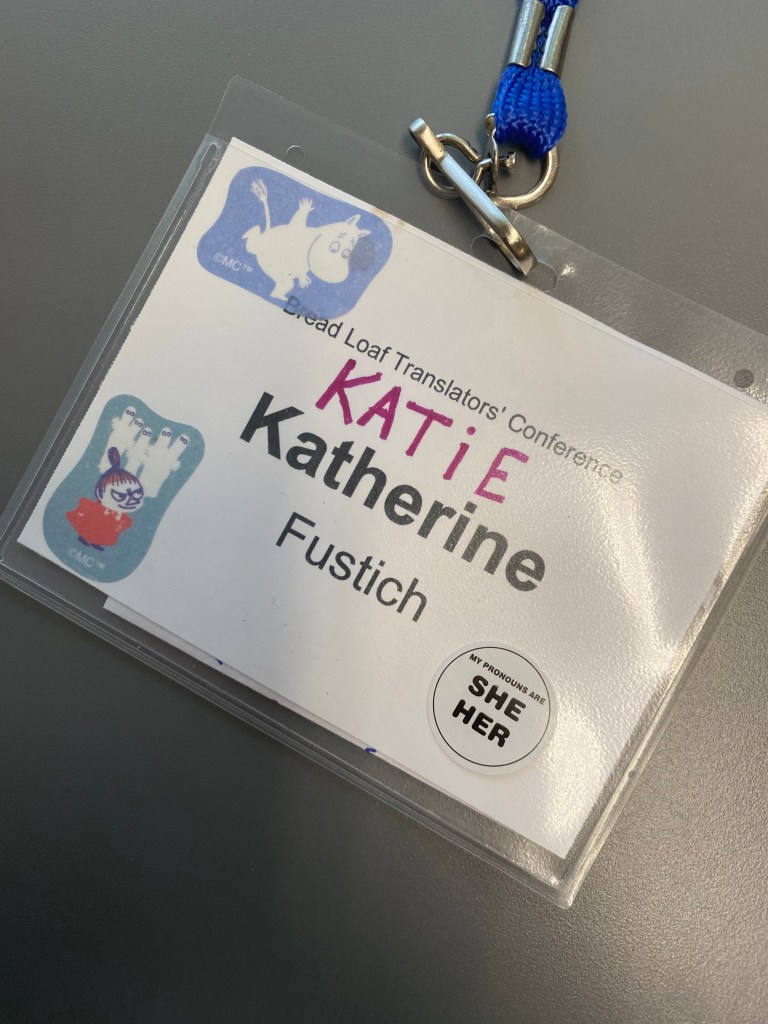
    Last month, I attended the Bread Loaf Translators’ Conference. In the days before, I was so nervous. “What if the other kids don’t like me?” I wondered.

    Those fears didn’t matter, in the end. A different version of myself came back down from that mountain.

    Surrounding myself with others who believe that reading and writing are the most beautiful stars in life’s constellation was indescribably affirming.

    Singing Alanis Morrissette at karaoke night was almost as affirming.

    What is the opposite of gatekeeping? Knowledge sharing? Whatever it is, it’s so refreshing; so needed. I understand the desire for mystique, but I think generosity builds legends in just the same way. 

    I bought my husband a Bread Loaf t-shirt. He wore it out to dinner the day after I got back. A woman leaving the restaurant looked at him and said “Bread Loaf! Wow!” She met my gaze as if to say “what an impressive fellow you have caught in your web.” Indeed.

    The real lesson from this experience is that I should have been reading so much more Benjamin this whole time.

    , ,

  • New Publication: Palestine Solidarity Encampment

    “Yesterday, we handed our written list of demands to the university. I don’t think I will ever forget how I felt, printing off the documents and running together to the Student Support Office with them tightly clutched in our arms” – Yuka, Former Steering Committee Member, University of Tokyo Palestine Solidarity Encampment

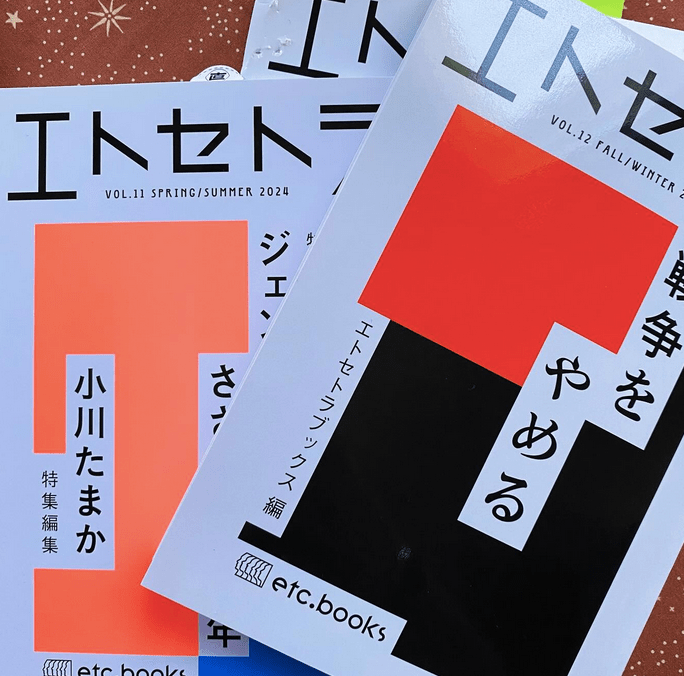
    Thank you so much to the brilliant editorial team at Spectre Journal for publishing my latest: a translation of a Palestine Solidarity Encampment Diary, originally published in Etc. When I first read the piece, I was so captivated by Yuka’s relentless dedication to women and queer activists, and her necessary interrogation of misogyny and homophobia in student activist spaces. It’s a story I think that anyone who has ever been involved in student organizing can see a little of themselves in.

    Etc. Books チーム、ありがとうございました!数年前から、大ファンです。Etc雑誌は本当に重要なな仕事をしていて、一緒にコラボする機会があったことをとても嬉しく思います。ゆかさんの言葉は私の頭にいつも響いています。