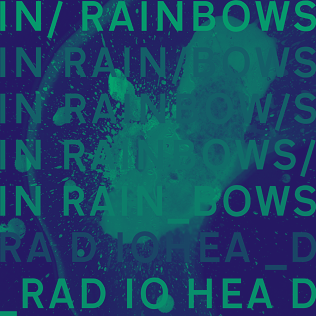
• All my heroes are dead

    You could say I’m a fan of Radiohead. You could say I’ve spent more than half of my life listening to them, own all of their albums, tattooed myself with lyrics from Karma Police before I was even 20 years old, have seen them in concert on multiple occasions and in multiple countries, each experience rapturous. Yes, you could say I am invested.

    And yet, today I sit here disillusioned by this group of five men from Oxfordshire, who are nowadays looking much less like keen-eyed and sharp-tongued auteurs and more like lolling middle-aged rock stars (Jonny Greenwood basically said as much while promoting his artisanal olive oil brand — the very existence of which says all you need to know). Nowhere has this shift  felt more apparent than the band’s “can’t we all just get along” stance on Palestine. 

    This isn’t new territory for Radiohead, admittedly. Ahead of a 2017 Radiohead concert in Tel Aviv, Roger Waters publically encouraged Radiohead to cancel the concert in support of the BDS movement. This came after repeated attempts at private discussion. Many Radiohead fans expressed support for Waters’ perspective. Thom Yorke responded in a lengthy statement that lambasted Waters and BDS — saying that their “black and white” way of thinking was unproductive, and demands paternalistic at best. The concert went on as planned. 

    Now, in light of the daily starvation, murder, and ethnic cleansing happening in Gaza, fans have renewed their requests to the band to stand up for Palestine. I am among them. I admit, my desire to have Radiohead speak on the issue is rooted in equal parts altruism and selfishness. I believe that we all have a moral calling to amplify the cries of Palestinians to the best of our ability. I also hope that artists who have been so important to me are brave enough to agree.

    Last week, Thom Yorke — who, by the way, has released four albums and toured extensively in the last two years — finally released a statement via his Instagram. I admit I was optimistic as I began reading Yorke’s perspective on, as he put it, “the unfolding humanitarian catastrophe in Gaza.” My hopes quickly fell. 

    What could have been a long-awaited opportunity to correct the record and join the chorus of voices in support of the oppressed was, instead, a pale lamentation on celebrity coupled with half-baked centrist politics. Yorke expressed surprise that his “supposed silence was somehow being taken as complicity” and that the “social media witch-hunts” have taken a “heavy toll on [his] mental health.” I can’t say for sure, but I imagine the mental health toll of watching your entire family burn alive is likely worse. 

    Yorke pressed on: “[T]he unquestioning Free Palestine refrain that surrounds us all does not answer the simple question of why the hostages have still not all been returned?” Ignoring the fact that this sentence structure resembles a college freshman’s attempt to appear erudite, Yorke’s derision of pro-Palestinian activists as unthinking horde cut to my core; cut through 15 years of admiration, late nights driving home alone, taking the long way so I could sing along to In Rainbows, posters taped above bedframes, and songs carefully selected for mix tapes. 

    The man I have so long felt a connection with has turned out to be a paper-thin bourgeois faux-intellectual fence-straddler. His words are the words of those who wish to be perceived as progressive, while maintaining their access to comfort and power. 

    Yorke’s statement concluded with finger-pointing at Netenyahu and Hamas, as opposed to a century-old colonial settler project, and platitudes about how much is meant to transcend borders and other self-serving bullshit. Maybe the fault was mine to begin with. What was I thinking, idolizing a 56-year-old British man? It was a project doomed to fail from the start. Either way, I am left wondering where to go from here. 

    Maybe I shouldn’t wonder too hard. Centering myself and my feelings makes me no better than the man who I have allowed to let me down for the last time. 
    . . .

  • Shadow Song

    . . .

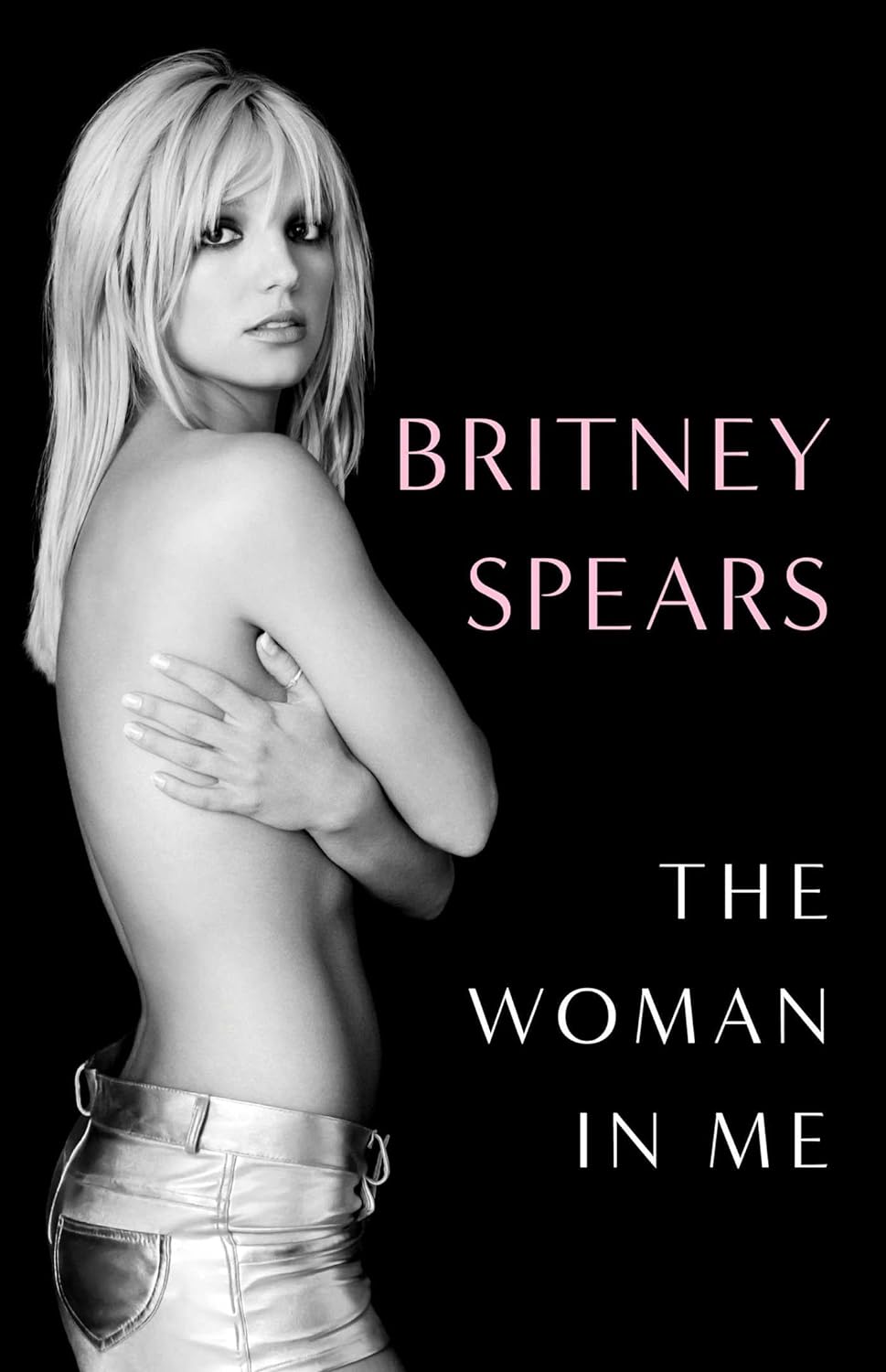
  • Book Review: The Woman in Me by Britney Spears

    I don’t think I’ve ever pre-ordered a book as quickly as I pre-ordered The Woman in Me. I even tried to get my hands on an advance review copy (to no avail). For my sixth birthday, I was given a tape of …Baby One More Time, which instantly transformed me into a Britney mega-fan. Within a matter of weeks, I was a card-carrying member of the Official Britney Spears Fan Club (as in I literally had a card in my Velcro wallet). There was a life-sized Britney poster on the back of my bedroom door that greeted me each day. Each time Britney released a new music video, I purchased the accompanying doll that would sing the chorus of the single when you pressed on her silver belly-button ring. You get the idea.

    As a teenager and adult, my childhood obsession waned into a more distant reverence for the artist that shaped me. Then, as a law student, I found myself face-to-face with Spears once again: as a clinical student in a civil litigation clinic, I worked with individuals who were looking to free themselves from guardianships, at the same time Spears was working to free herself from hers.

    For 13 years, one of the most successful entertainers of all time was subject to a legal conservatorship. From 2008 to 2021, Britney Spears’ father controlled her money, her healthcare, and her relationships — while pocketing millions of dollars each year for himself. As the realities of this control became more public, Spears’s fans formed the #FreeBritney movement and engaged in a highly-publicized rallying cry to grant the artist her independence.

    Since freeing herself from the conservatorship, Spears has been on a complex healing journey. Her intertwined feelings of anger, betrayal, liberation, and contentment are often chronicled in lengthy Instagram posts, accompanied by videos of her dancing in her home, or trying on different outfits. The posts are not always straightforward (and when is healing ever linear?), causing some to question Spears’s wellbeing. In early 2023, concerned “fans” requested a welfare check to Spears’s home, resulting in a police presence and a subsequent plea from Spears to respect her privacy. These incidents create an ever-present sense that, though she is technically free, she is forever at risk of being re-victimized by the legal system that held her captive for more than a decade.

    With the neverending vortex of narratives swirling around her existence, Spears announced her memoir in July of 2023. The publisher describing the “groundbreaking” book as “illuminat[ing] the enduring power of music and love–and the importance of a woman telling her own story, on her own terms, at last.”

    On October 24, 2023, the day of its publication, I opened the cover of my freshly-pressed copy of The Woman in Me with high expectations. Immediately, I was struck. Spears opens the memoir with a prologue, reflecting on times as a child when she would escape the chaos of her family home for the nearby woods. There, Spears reflects, she felt peace — she felt God. This search for stillness amidst the chaos is a defining theme of the book. From a childhood spent bouncing between cities and jobs, quite literally feeding her family, to an adulthood sequestered at home so as to avoid the paparazzi, we see the ways in which Spears is so rarely given the opportunity to focus on her own needs.

    As a writer, Spears’s storytelling style is fluid and conversational. At times, I felt like I could imagine Spears sitting at lunch with a friend, or even reclined on a therapist’s sofa, describing the heartbreak of a failed relationship, or the grueling schedule of a world tour. Narratively, this can make timelines difficult to follow. There are chapters that oscillate in time, discussing the era surrounding one album and then hopping back to the one prior. More than once I found myself flipping back a few pages to make sure I hadn’t missed a transition or a reference to a date only to realize there was none. Reflecting on the book as a whole, though, I see how the memoir is not meant to be a linear narrative, but a reflection on a life defined by the tensions between freedom and control.

    While the lead-up to the book’s release focused largely on revelations about Spears’s relationship with Justin Timberlake, one of the key motivations for the existence of the book itself was the conservatorship. Accordingly, the final third or so of the book focuses on the reality she faced for 13 years: no access to her own money, guards controlling her every move, medications forced into her body to make her compliant.

    Then, as swiftly as the conservatorship was imposed, Spears references its end. The book draws to a brisk close in a way that left me imagining the narrator, at lunch or on the couch, was trying to quickly wrap things up and get on with their day. I noticed a similar urge at other inflection points in the book, such as which Spears famously shaved her head while the paparazzi photographed her from outside the salon. Spears’s description of that turbulent time in her life leaves much clearly lurking under the surface, while readers are given clipped justifications.

    This tendency in the book left me deeply conflicted, both by the writing itself and even moreso by my response to it. Spears’s memoir explores the control and manipulation she has been subject to her entire life; being observed and picked apart to the point where it broke her. The book is, in this way, a contradiction: a tell-all memoir that at its core really tells the reader that the world is not owed a full explanation. Yet, as a reader, I found myself doing exactly that: wanting more details, more exposition, more of everything. It was an opportunity, albeit an uncomfortable one, to examine why I felt that sense of entitlement.

    From a literary standpoint, there are flaws in this book. Repetition, odd editing, choices to fixate on throwaway observations in favor of depth and detail. And yet. The Woman in Me triumphs over any critique because of the simple fact that it does exactly what it set out to do: tell Britney Spears’s story in her own words.

    . . .