• Free Knitting Pattern: 21st Century Austen Heroine

    INTRO

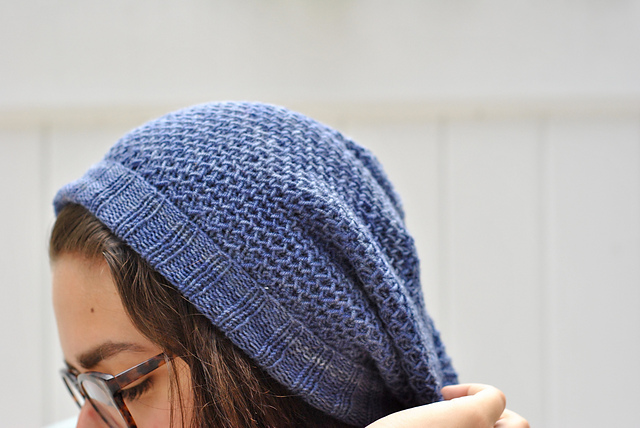
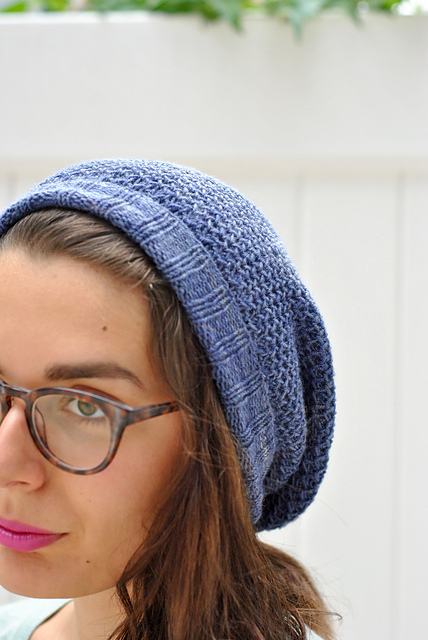
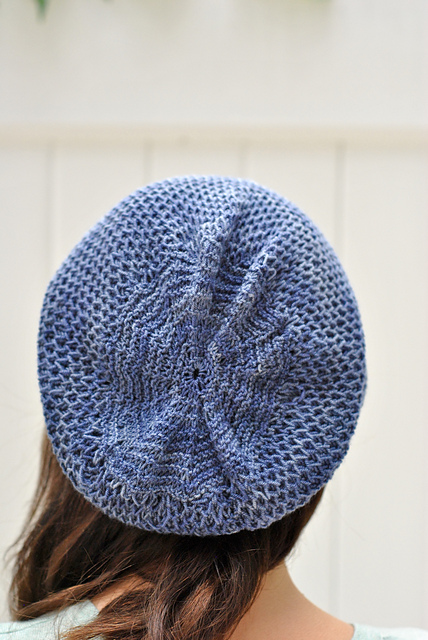
    May this bonnet be a testament to the fact that necessity breeds innovation. After I was struck with a powerful urge to knit a chapeau of this style, a search led me to the realization that no such pattern exists (for adults anyway…per usual, my desired mode of dress is reserved for humans under 2 years old). 

    Well, I thought, time to brush off my patternmaking skills and put together the hat of my dreams. After a few attempts, I developed “21st Century Austen Heroine” so named after the fact that it is both romantic and a little odd – just like my favorite characters.

    The bonnet can be worn fastened for an elegant look, or untied for an effortlessly cool vibe. While I chose a neutral shade to match my winter wear, I think this would look equally incredible in a vibrant shade. 

    However you decide to rock your bonnet, may your chilly days be filled with wit, warmth, and love! ♡

    MATERIALS

    • Size 3 circular needles
    • Size 3 straight needles
    • Approximately 275 yards of fingering weight yarn
      • I used Diamond Laine Elmer in the colorway “Cashew”
      • Shout out to “The Lamb & Kid” on Bainbridge Island, WA, where I purchased this yarn. It’s one of the most beautiful fiber shops I’ve ever been to!

    GAUGE + FINISHED DIMENSIONS

    1” wide = 5 ½ stitches

    1” tall = 8 stitches

    THE PATTERN

    BACK OF THE HEAD

    Cast on 33 stitches. 

    Row 1: Slip 1 stitch, knit 32 stitches.

    Row 2: Slip 1 stitch, purl 32 stitches.

    Repeat Rows 1 & 2 until your piece measures roughly 9” long, unstretched. 

    Cut the working yarn. 

    SHAPING THE HEAD

    You will now begin shaping the crown of the head. To do this, you will pick up and knit the sides of your piece, and continue knitting back and forth. If you have ever knit a sock, this stage is going to look very similar to picking up the heel flap. If you haven’t knit a sock, ignore me and forge on! 

    With the right side of the fabric facing you, use one of your straight needles to pick up 33 stitches alongside the left edge of your piece. 

    Then, use another straight needle to pick up 33 stitches along the right edge of your piece. 

    You should now have a total of 99 stitches across your three needles. You can continue working across three needles, or move all stitches back to the circular needle (it might be a little tight at first, so you may want to work a few rows across three needles before transferring). 

    Row 1: With the RS of the fabric facing you, knit across all 99 stitches.

    Row 2: With the WS of the fabric facing you, purl across all 99 stitches.

    Gradually, you will see the crown of the head begin to take shape. 

    Continue knitting Rows 1 & 2 until the piece measures approximately 9.5 inches tall, and – when laid flat and folded in half – 7.5 inches across at its widest point. 

    End on a RS row. 

    For a larger, deeper bonnet, you can continue knitting, but you will want to stop approximately 1 inch less than your desired length. 

    FINISHING THE HEAD

    You will now create the garter stitch edging on the front of the bonnet.

    Row 1: With WS of the fabric facing, knit all stitches.

    Row 2: With RS of the fabric facing, knit all stitches.

    Rows 3, 5, 7, 9: Repeat Row 1.

    Rows 4, 6, 8: Repeat Row 2. 

    Row 10: Cast off using your preferred method. I used the “Jenny’s Surprisingly Stretchy Bind-Off” method, but any bind-off will do. 

    Cut the working yarn.

    ADDING THE TIES

    You will now add the bottom brim of the hat and the ties in one fell swoop!

    Row 1: Using your circular needle, cast on 75 stitches.

    Then, with the RS of the hat facing you, pick up the bottom edge of the hat. The size of the hat will dictate just how many stitches you pick up. Using my gauge and dimensions, I picked up a total of 78 stitches. The most important thing here is to ensure you pick up an even number of stitches on both sides of the hat, with the back of the hat as the midpoint. 

    After you have picked up the bottom edge of the hat, cast on an additional 75 stitches.

    Your circular needle should now have a total of 228 stitches ready to knit.

    Row 2: With WS of the fabric facing, knit all stitches.

    Row 3: With RS of the fabric facing, knit all stitches. 

    Rows 4, 6, 8, 10: With WS of the fabric facing, knit all stitches.

    Rows 5, 7, 9: With RS of the fabric facing, knit all stitches. 

    Row 11: Cast off using your preferred method. I used the “Jenny’s Surprisingly Stretchy Bind-Off” method, but any bind-off will do. 

    Cut yarn and weave in all ends. 

    Go forth and be fabulous!
    . . .

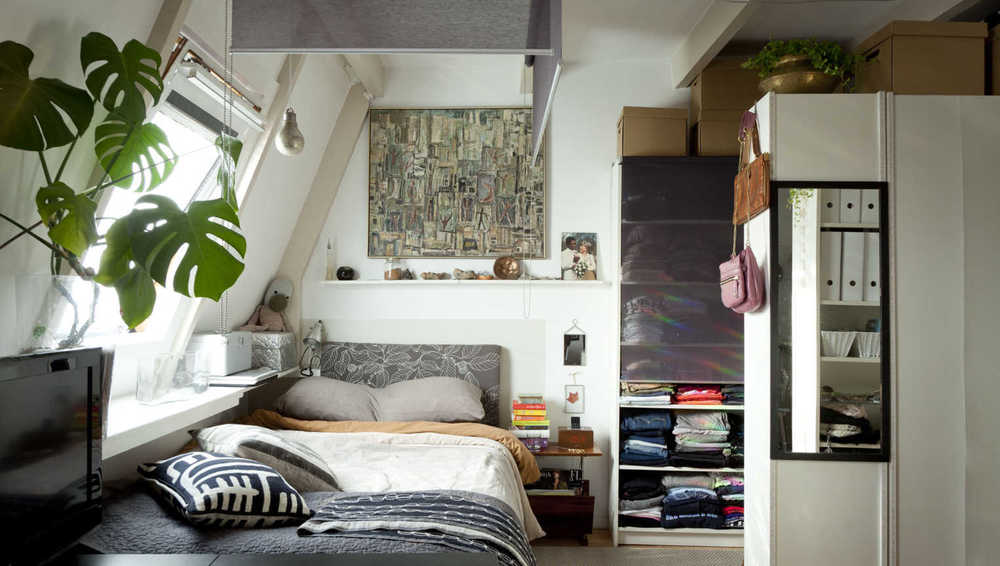
  • Blocking Knitting In A Small Apartment

    www.ideas4homes.com

    It’s no surprise that blocking is considered an integral part of the knitting process. Those who choose not to block are missing out on a life of even stitches, soft and squishy fabric, and even hemlines. (But that’s another story altogether.)

    It would be truly ideal if we all lived in homes with an exclusive knitting room where we could spread out a giant blocking board and lay out ten shawls at a time. Unfortunately, some of us live in New York City apartments where available floor space is a laughable concept. 

    If you don’t have much room to dedicate to the art of blocking–whether you find yourself in a dorm room, community space, or the aforementioned East Village studio–don’t fear! Years of cramped quarters have led me to the development of a small-scale blocking regimen. Here’s my tips:

    Soaking

    Leaving my pieces in an industrial ten-gallon bucket in the basement? Yeah, not going to happen. Believe it or not, I soak my knitting in a pasta pot. Bigger projects tend to protrude out of the pot, so this method requires some stirring/monitoring in order to make sure all parts of the piece get equal attention. Oh, and make sure you don’t turn on the stove.

    I also use Soak Wash products in order to maximize my blocking results. I plan on doing a more comprehensive review of their products in the future, but for now let me just say: worth it. 

    Pinning

    In order to save space, I don’t use any kind of blocking board. Instead, I use a yoga mat. It’s surprisingly perfect when it comes to fitting into tight corners or sliding from one corner of the apartment to another. And of course, when the blocking is all done, the mat rolls right up and stashes away. (What? You thought I was exercising?) 

    It very well may just be me, but I find that I am constantly losing all kinds of pins in the blocking process. When you’re blocking in a small and high-trafficked area, a rogue T-pin is the last thing anyone wants to discover. To solve this, I bought a set of Knitter’s Pride Blockers. The large size minimizes how many pins you need (one set works completely for an entire sweater), and they work wonderfully with a squishy yoga mat. 

    Drying

    One concern I really had about blocking in an apartment was potential pests. Bugs love moisture and the idea of having a wet sweater laying on my floor for a few days freaked me out to the max. But I’ve come to minimize the excess moisture with the use of a bath towel places in between the projects and the yoga mat. This helps keep moisture at bay. 

    Furthermore, if you are able to place the project in indirect sunlight, near a fan, or near an open window, the drying process will be pleasantly expedited and you can stop searching exterminator reviews on Yelp. 

    Where to Block?

    With all of this in mind, you’re ready to compactly block like a pro. But one question does remain–where can I actually block when my floor space is so limited? Here are a few places I have made magic happen:

    Under a kitchen table, under the bed, in the bathtub, on a kitchen counter, inside a storage unit, on top of a bookshelf, on a shelf of the aforementioned bookshelf, on the roof (on a hot day)…

    Anywhere there is space, it is yours to use! 

    Remember, blocking doesn’t have to be glamorous, because your knits will be glamorous afterwards.

    xoxo

    . . .

  • All About Rhinebeck 2015 + Photos

    This post was written by my best friend, MJ Saunders, and originally appeared on her blog. She summed up the whole experience so perfectly and I was honored she let me share it with you!

    Last Saturday, I fulfilled a knitting dream I’d had for about eight years and attended my first New York Sheep and Wool Festival in Rhinebeck, NY! Read more below about petting sheep, fearing yarn commitment, and learning–the hard way–about planning ahead…

    When I began knitting as a grumpy, anti-social pre-teen, I quickly discovered the online world of knitters and used their beautiful blogs to supplant my lack of real-world knitting friends. Since I had to stay in high school, couldn’t drive, and my yarn budget depended on whatever my mom was willing to buy for me at Jo-Ann, I quickly developed a fascination with stories of the big North American yarn festivals: Stitches West! Taos! TNNA! Maryland Sheep and Wool! And the big whopper: New York Sheep and Wool, aka Rhinebeck, a two-day yarn extravaganza only one state away. To my young self, Rhinebeck was practically a pilgrimage, a conference where knitters of the world gathered to buy supplies en masse and show off their sweaters made just for this special occasion. I wanted to make that journey with them. I wanted to go to Rhinebeck.

    Gradually I lost some of my grumpiness and anti-social tendencies and made friends in high school, and–miracle of miracles!!!–many of them were knitters. A few of us even had a weekly knitting club, cramming into a small room off of a teacher’s lounge where we’d knit through the 50 minutes of homeroom and try to ignore the screeching sounds of the printer in the corner. Among these crafty teens was @fooost, who became one of my best friends and favorite knitting companions. Over seven years of friendship we have agonized over many patterns and laughed over many knitting mistakes, and when she moved to New York City to attend NYU for college, we casually agreed that someday, I should come to visit her in the fall and we’d go to Rhinebeck together. 

    This May, we compared our school schedules, found that my fall break began the exact weekend of Rhinebeck, and immediately bought passes.

    We learned our very first lesson about Rhinebeck on Friday, the night before we’d planned to take the Amtrak from NYC to the festival: it is big. We thought that we could just buy our tickets at the station on Saturday morning, but Friday night when we looked at prices online, we were perplexed as to why the train tickets were so expensive. One phone call to the Amtrak customer service informed us that all the trains to the Rhinebeck station had sold out months ago, and ours were so pricey because there were only SEVEN unclaimed seats on the whole train left. 

    So we made peace with our mistake and bought them over the phone, and woke up at 5:30 am in order to pick them up at Penn Station before our 7:15 am train departed. The train ride itself was lovely; though we were seated on the opposite side and didn’t get a view of the Hudson, upstate New York in the height of fall did not disappoint. 

    Our lesson on planning transportation ahead continued when we arrived however, and had to wait about 20 minutes for the next taxi to take us to the fairgrounds. After our shuttle dropped off a large group of Brooklyn hipsters attending a wedding nearby, we got to the festival gates at 10 am (however, because we missed the opening rush we didn’t have to wait in line!)

    I had read that Saturday is Rhinebeck’s busier day, and that the morning is the best time to come before the afternoon crowds make it too crowded. This was definitely true, and after lunch we could barely get through the barns. The morning was much colder, but much more peaceful, and we walked through the fairgrounds just taking everything in and stopping to browse at nearly every booth.

    If you are a knitter, or really a lover of any hobby that produces material goods, you’ll understand what I mean when I talk about fear of commitment. Katie and I had visited a few barns and outside tables laden with hank after hank of gorgeous yarn, but we were too hesitant to buy any of it right away. “We’ll come back!” we kept saying as we passed up bison wool, machine-washable alpaca yarn, and gradient sock yarn. We briefly feared that we’d leave the festival without purchasing anything, too afraid to pick just a few things out of the thousands upon thousands of items for sale. 

    Luckily, we were saved by the discovery of the O-Wool booth. After several minutes of browsing, I selected three skeins of O-Wash Fingering in a light, dusty pink called “Pasture Rose” and Katie had put together a bundle of their beautifully rustic Local base in navy, deep green, and gold. And then came Rhinebeck Lesson #2: bring cash. The internet service at the festival was spotty in places, and O-Wool’s credit card service was sadly put on hold. Thankfully they offered to set Katie’s yarn aside until she could visit an atm at the other end of the park, and let her move to the front of the line later to pick it up! 

    Aside from the inspecting the wonders of nearly every booth we found (and eating a very delicious lunch), we had a great time visiting the animals at the festival. Local farmers and 4-H groups filled one barn with various sheep breeds and another with goats, llamas, and alpacas, and several people were even selling very cute and very fluffy angora rabbits! We also caught a sheepdog herding demonstration and the tail-end (ha) of the ram auction. I also made friends with one particular sheep who enjoyed having his nose gently scratched, which might have been the highlight of my afternoon. 

    What left the biggest impression on me about Rhinebeck overall was that far from being different or disappointing, it was exactly as fun and happy as I expected. Katie and I discussed several times how polite and courteous all of the festival-goers were: though the crowds were large, no one was pushing or shoving to get into booths; no one was complaining if they had to wait in line; we struck up pleasant conversations with random knitters on the train, in the taxi, at a picnic bench, in booths, and everyone was just as excited to be there as we were. It was incredible to look around at strangers and recognize the patterns they’d made their items from and feel amazed knowing that even the most professional-looking garments were all made by hand. It was a convention of several thousand people who were all just as in love with needlecrafts as we were. 

    We bought tickets for a return train at 3 pm, even thought the festival ended at 5 pm, and that was a good idea. Along with avoiding the traffic of everyone leaving at once, we also got back to the city in time to give our feet some much-needed rest. It was a long day, but a very, very good one. I couldn’t be happier that my first Rhinebeck was spent on a beautiful day with my best friend, and I know that we will go back together in the future! Although I’m sure we’ll commit to being at Rhinebeck from opening til close, for our first time we definitely were ready to go home early. After all, we had a lot of winding to do…

    . . .

  • No Sleep ‘Til Rhinebeck

    I am so thrilled to share that I’ll be attending this year’s Rhinebeck Sheep And Wool Festival AKA Knitter’s Comic Con AKA This Saturday! 

    My best friend MJ will be flying in on Friday night, and I’m sure we’ll hardly be able to sleep. Neither one of us has ever been to Rhinebeck, and so we’re all the more thrilled. 

    Of course, no A+ Rhinebeck attendee would be caught dead without their Rhinebeck Sweater. MJ and I have both knit multiple sweaters this year (something I never thought I’d say…and yeah, it feels good), so we’ll have a few options based on the weather. 

    I’ll be bringing along my camera and taking tons of pictures–I promise I’ll try to snap a few that aren’t of me cuddling with a baby alpaca. 

    I’m simultaneously thrilled and a bit nervous about meeting so many members of the knitting community, both old and new. I am sure I will flounder through a lot of nervous introductions and treat certain spinners or designers like a Kardashian, but so be it! And of course, if you happen to read this humble corner of the internet, please say hey! 

    Anyway, I’ll have so much to share after the fest, so keep your eyes peeled this weekend!

    xoxo

    . . .

  • Free Pattern: Mithril Beanie

    DSC_0402_medium2

    It’s no secret that I am absolutely, without a doubt, a Lord of the Rings fanatic. I own the books in multiple languages and recently got a Leaf of Lohrien tattoo (sorry mom!). The story and its lore inspires so much of my work and it was really just a matter of time before I created a knitting pattern dedicated to the Fellowship.

    Mithril–the namesake of this project–is an elven metal that is lighter than a feather, but stronger than steel. Bilbo Baggins is gifted a shirt of Mithril armor in The Hobbit, and he passes it down to his nephew Frodo in the later trilogy.

    Just like Mithril, this beanie is lightweight yet cozy. It’s made using the honeycomb stitch which is an awesome texture to add to your knitting repertoire. The free pattern starts just below. Let me know what you think and, as always, contact me with any and all questions!

    DSC_0405_medium2

    THE PATTERN

    Materials:

    • 1 skein of Araucania Huasco Botany Lace in Indigo OR approximately 350 yards of any fingering weight yarn.
    • #6/4.0mm circular needles
    • #6/4.0mm double-pointed needles
    • Stitch marker, measuring tape, scissors, needle

    Abbreviations Used:

    • k: knit
    • p: purl
    • k2og: knit two stitches together
    • p2tog: purl two stitches together
    • sl: slip stitch purl-wise

    Casting On:

    Using your circular needles, cast on 104 stitches. Place a stitch marker to denote the beginning of the round. Join your stitches for working in the round.

    Ribbing:

    k2, p2 across the row.

    Repeat until ribbing measures 3″.

    Body:

    The body of the hat is worked using the Honeycomb Stitch. It can be a bit complicated and I recommend testing it out with some extra yarn first so you can get a feel for how the pattern works. Even if you’ve worked the Honeycomb Stitch flat before, working it in the round is slightly different. It goes like this:

    Set-Up Round: [purl 1, slip 1 purlwise with yarn in front, yarn over], repeat brackets to end.

    Round 1: [knit 2, slip yarn over purlwise with yarn in back], repeat brackets to end.

    Round 2: [slip 1 purlwise with yarn in front, yarn over, purl 2 together], repeat brackets to end.

    Round 3: [knit 1, slip yarn over purlwise with yarn in back, knit 1], repeat brackets to end.

    Round 4: [purl 2 together, slip 1 purlwise with yarn in front, yarn over], repeat brackets to end.

    Repeat rows 1-4 until the hat measures 8″ from your cast-on edge. 

    Crown:

    The crown is worked in garter stitch. This is a bit annoying since we’re working in the round, but I promise it’s cool! Work your decreases as follows:

    Round 1: [k13, k2tog] Repeat brackets to end of round.

    Round 2 (and all even rows): P across to end of round.

    Round 3: [k12, k2tog] Repeat brackets to end of round.

    Round 5: [k11, k2tog] Repeat brackets to end of round.

    Round 7: [k10, k2tog] Repeat brackets to end of round.

    Round 9: [k9, k2tog] Repeat brackets to end of round.

    Round 11: [k8, k2tog] Repeat brackets to end of round.

    Round 13: [k7, k2tog] Repeat brackets to end of round.

    Round 15: [k6, k2tog] Repeat brackets to end of round.

    Round 17: [k5, k2tog] Repeat brackets to end of round.

    Round 19: [k4, k2tog] Repeat brackets to end of round.

    Round 21: [k3, k2tog] Repeat brackets to end of round.

    Round 23: [k2, k2tog] Repeat brackets to end of round.

    Round 25: [k1, k2tog] Repeat brackets to end of round.

    Round 27: [k2tog] Repeat brackets to end of round.

    Finishing:

    You should have 16 stitches remaining on your needles. Cut your yarn and pull through the remaining stitches. Sew in ends.

    For a slouchy look (as pictured) you’ll want to block. It really opens the honeycomb stitch and makes for a much looser fit. But you can leave it as is for a tighter, more close-fitting beanie.

    Happy knitting!

    xoxo

    DSC_0406_medium2

    . . .